Shared and Parallel Event Design
When two families, faith communities, or cultural traditions are involved, the first planning decision is not whether one event is better than two. It is which parts of the wedding can be shared, which need their own structure, and who must confirm each stage.
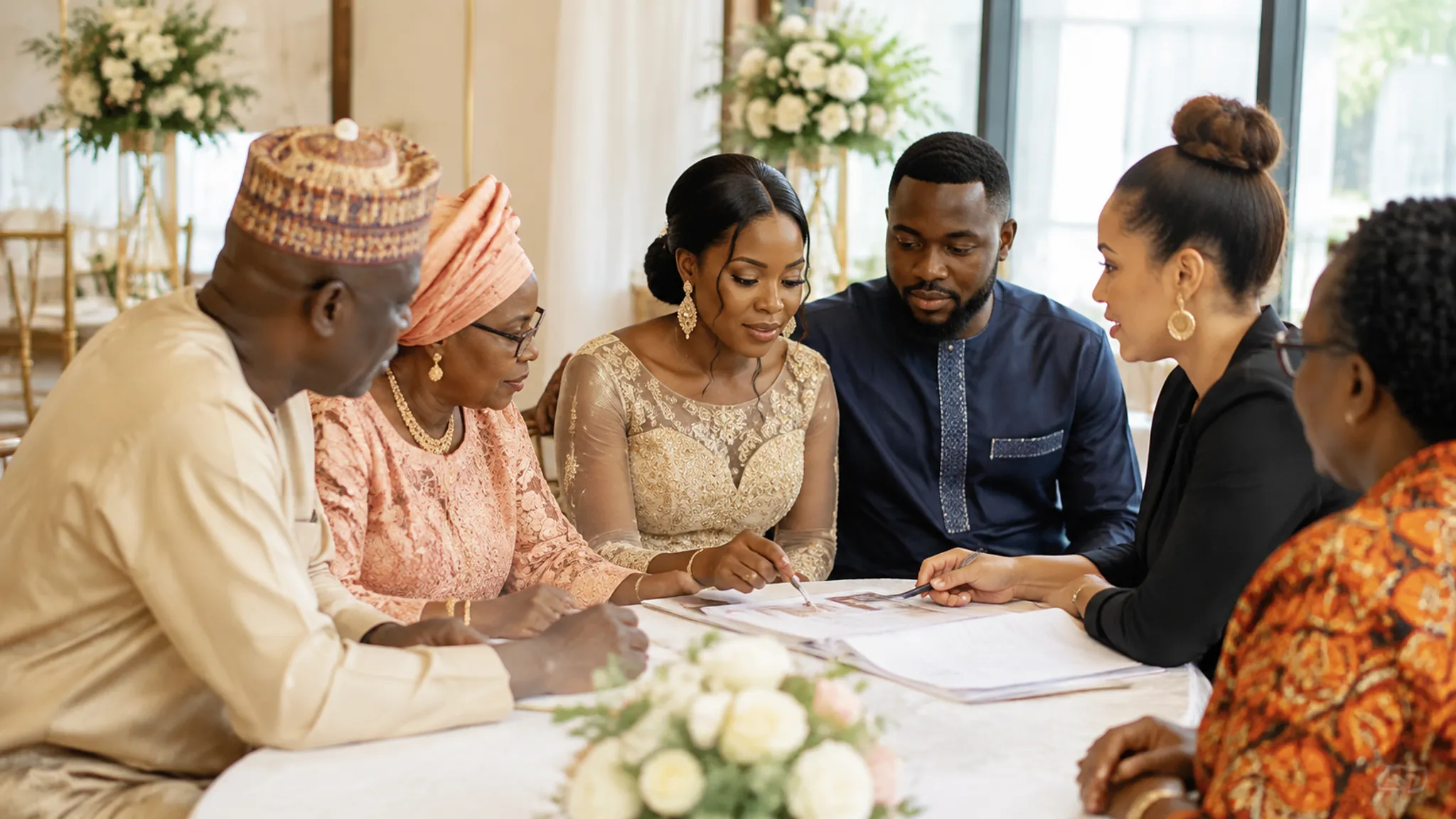
A multicultural wedding ceremony may include a family introduction, traditional engagement, civil ceremony, church or mosque ceremony, and reception. These stages can have different meanings, hosts, participants, and procedural owners.
The couple may coordinate the overall plan, but a family confirms its customs, a congregation confirms religious participation, a registry confirms current civil procedure, and a venue or vendor confirms practical delivery. Keep those responsibilities visible from the beginning.
More specific pages
These pages continue the topic in smaller, more specific directions.
One Integrated Ceremony or Separate Wedding Events? A Structure Decision
Begin by listing the actual events under consideration. “One wedding” may describe a connected plan rather than one ceremony.
- The couple may decide how the day should feel and how guests move between stages.
- Each family may clarify customs, participants, gifts, attire, language, and hosting responsibilities.
- The registry may provide current information about civil procedure, documents, witnesses, appointment timing, and venue conditions.
- The congregation or faith authority may determine whether a religious ceremony can be combined, adapted, or scheduled beside another event.
- The venue may confirm capacity, access, changeover time, catering rules, privacy, and guest movement.
- Vendors may need the final sequence for photography, music, food service, outfit changes, transport, and setup.
The practical question is: which parts need to remain distinct, and which parts can be experienced together?
Shared wedding ceremony
A shared wedding ceremony places the central gathering, or several ceremony elements, within one coordinated event. Guests may stay in one venue while the programme moves between cultural, family, religious, or civil components.
This format may simplify guest communication, travel, photography, food, and reception timing. It also requires agreement about order, language, participation, symbols, music, attire, and transitions.
A ceremony may look combined to guests while still containing elements that need separate approval. A venue that can hold the participants does not automatically have permission to host every ceremony element. Confirm the ceremonial and procedural boundaries separately.
Parallel wedding events
Parallel wedding events are connected parts of one wedding plan. They may occur on the same day, on nearby dates, or in different locations, depending on family expectations, faith communities, registry arrangements, and travel requirements.
This structure may suit couples who want both traditions represented without merging them into one ceremony. One family might host one event and the other family another. The couple may connect them through shared invitations, coordinated attire, a common reception, or a clear timeline.
A Ghanaian study of parallel marriage ceremonies offers a regional example of family, community, organisational, and financial pressures. It should not be treated as evidence of a Nigerian rule. Its planning relevance is narrower: multiple events can create more decision points than couples initially expect.
Before choosing this model, identify who hosts each event, which guests attend, which participants are required, how people travel, who pays, which vendors work across stages, and how a delay affects the next ceremony.
Separate wedding events
Separate wedding events give each ceremony or cultural gathering its own setting, programme, and preparation period. This may help when the events involve different participants, languages, venues, religious settings, or family expectations.
Separation can also preserve a ceremony that should not be blended with another. Comparative research on couples who do not share religious beliefs describes cases where ceremonies stand alongside each other rather than being merged. That comparison cannot establish what a Nigerian family or faith body will choose, but it shows why combining everything is not automatically the most inclusive option.
Guests need clear information about which invitation applies to which event, expected attire, attendance limits, and whether a gathering is ceremonial or mainly social.
What Changes the Ceremony Structure?
The same cultural or religious elements can lead to different event designs. Assess the structure through approval, meaning, timing, participant roles, guest access, and workload rather than appearance or prestige.
Religious participation
If a church, mosque, or other congregation is involved, ask the relevant authority about its current position before announcing a combined ceremony.
- Can both partners participate in the proposed form?
- Which celebrant or leader must be present?
- May another ceremony take place before or after it?
- Do readings, prayers, music, language, clothing, or symbols need approval?
- Must the ceremony occur in a particular setting?
- Are preparation meetings or documents part of the current process?
A civil ceremony, religious ceremony, family ceremony, and cultural rite may carry different meanings and responsibilities. Do not describe one as equivalent to another without confirmation from the responsible institution.
Family standing and hosting
In some families, a ceremony is also a public exchange between families. Representatives may handle greetings, introductions, gifts, negotiation, hospitality, or announcements.
Ask each family to identify the person who can confirm expectations, the stages that should remain recognisable, the parts that may be adapted, the people who need to attend, and the language or translation support required.
Also record the clothing, gifts, food, and preparation items involved, along with the point at which the family considers its role complete. Agreement between the couple is the starting point, not necessarily the final confirmation.
Civil procedure
Civil procedure belongs to the relevant registry and jurisdiction. Current information may cover appointment availability, documents, witnesses, fees, venue conditions, and the order of administrative steps.
Confirm those details directly with the registry handling the appointment before fixing the wider event schedule. This page cannot determine the civil status of a cultural or religious ceremony, or whether a particular combination meets current registry requirements.
Keep a separate civil-procedure column in the planning document. That prevents registry details from being mixed with family custom, religious permission, or reception logistics.
Venue and participant movement
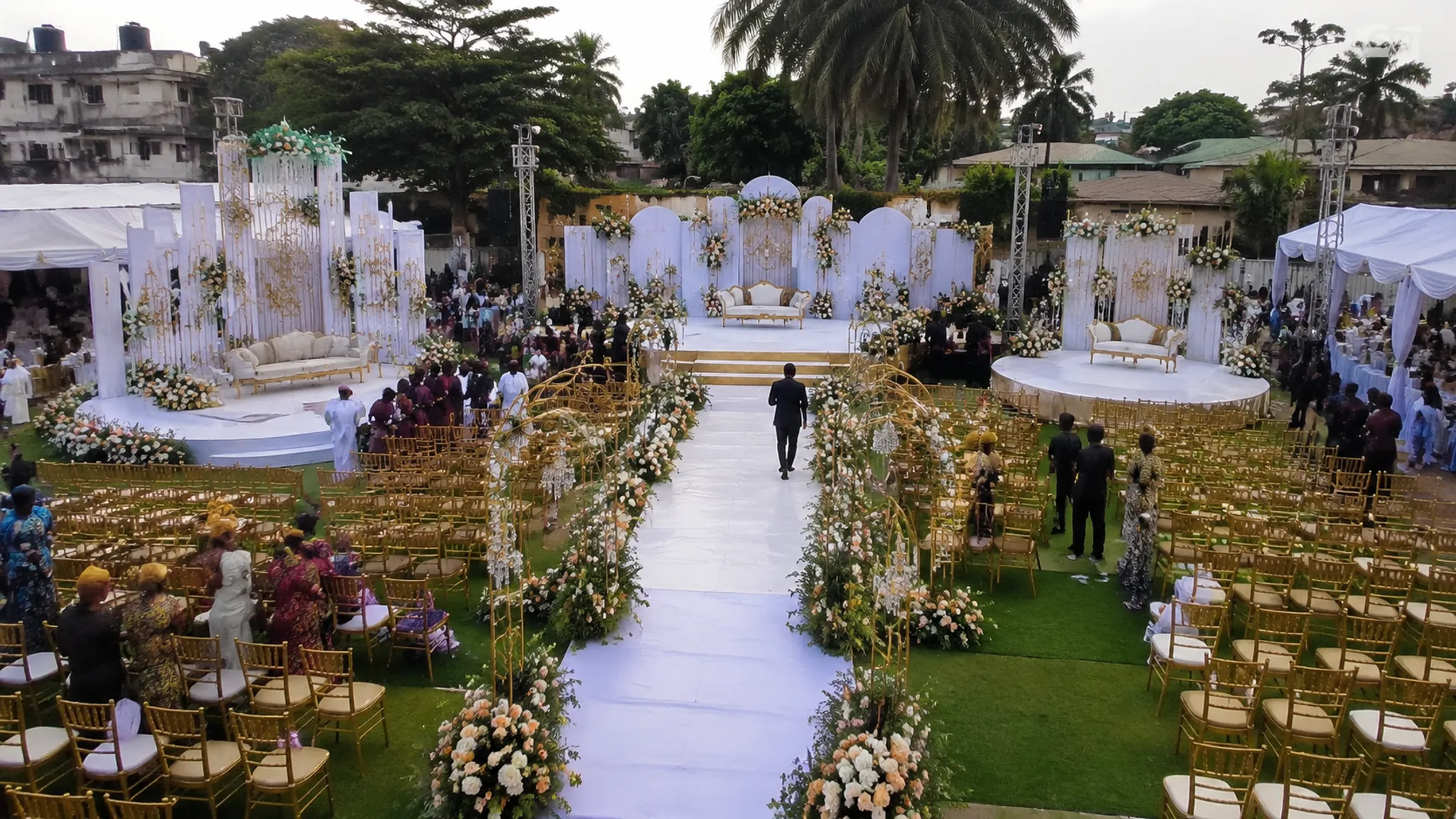
A shared venue may support a combined event when its capacity, access points, seating, sound system, privacy, and changeover time fit the programme. Research on interreligious wedding spaces can help couples think about the positions of the couple, celebrant, witnesses, relatives, and friends. It does not establish religious permission.
Ask the venue about full guest capacity, seating changes, private preparation rooms, sound and translation arrangements, access for elders and guests with mobility needs, catering timing, photography restrictions, setup windows, and transport between locations.
A room may be adaptable. The people and institutions using it still need to agree on the ceremony.
Comparing the Main Event Models
Use this comparison as a planning discussion, not a ranking.
| Structure | May suit couples who want | Main coordination question | People or institutions to confirm with |
|---|---|---|---|
| One integrated ceremony | One shared guest experience and a single main programme | Can the elements be combined respectfully and practically? | The couple, families, congregation, registry, and venue |
| Parallel events | Distinct ceremonies connected through one wedding plan | Can the couple and guests manage the additional transitions? | The couple, families, hosts, vendors, and venue |
| Separate events | Clear boundaries between cultural, religious, family, or civil stages | Which guests, responsibilities, and timeline belong to each event? | The couple, families, congregation, registry, and vendors |
| Ceremony and reception split | A formal or ceremonial stage followed by a broader social gathering | Which guests attend each part, and how is the transition explained? | The couple, ceremony authority, venue, caterer, and guests |
A third location may offer distance from competing expectations. It can create a neutral setting for the couple, but it may also add travel, accommodation, and venue requirements.
The location does not remove negotiation. It changes where the negotiation takes place.
How to Adapt Traditions Without Losing Clarity
Research on ceremonial adaptation describes several ways couples may work with tradition. They may retain a familiar element, translate it for a different audience, combine elements, or personalise the ceremony around faith, heritage, values, family, and timing.
Review each proposed element through three questions:
- What does this element mean to the people who requested it?
- Who needs to approve its wording, timing, participants, or setting?
- What can change without making the element confusing or unacceptable to that group?
For example, a couple might retain a family entrance, explain it in another language, and place it within a shared reception programme. This illustrates a planning method, not a fixed Nigerian sequence.
Write the actual decision instead of saying “include both cultures.” The plan might retain a family greeting while shortening its public explanation, use two languages with a named translator, keep separate prayers, or schedule different traditional outfits for the family event and reception.
It might also use one shared meal while recording dietary requirements separately, or invite extended relatives to the reception while limiting attendance at a smaller ceremony. The people responsible for each element should confirm the proposed adaptation.
Guest Access and Diaspora Logistics
Guest access often determines whether an event feels shared or separate. One stage may be open to everyone, while another includes only family members, witnesses, religious participants, or invited guests.
Prepare a guest map with four groups:
- Guests attending every event
- Guests attending one ceremony only
- Guests attending the reception but not the ceremony
- Ceremony participants who are not regular guests
Confirm the information each group needs, including date, location, start time, dress expectation, language support, and whether guests should remain in place during transitions.
For diaspora weddings, add travel and recovery time to the structure decision. A sequence that works for local guests may be difficult for relatives arriving from another country or region. Ask the people coordinating travel before placing multiple ceremonies on the same day.
Vendor and Schedule Dependencies
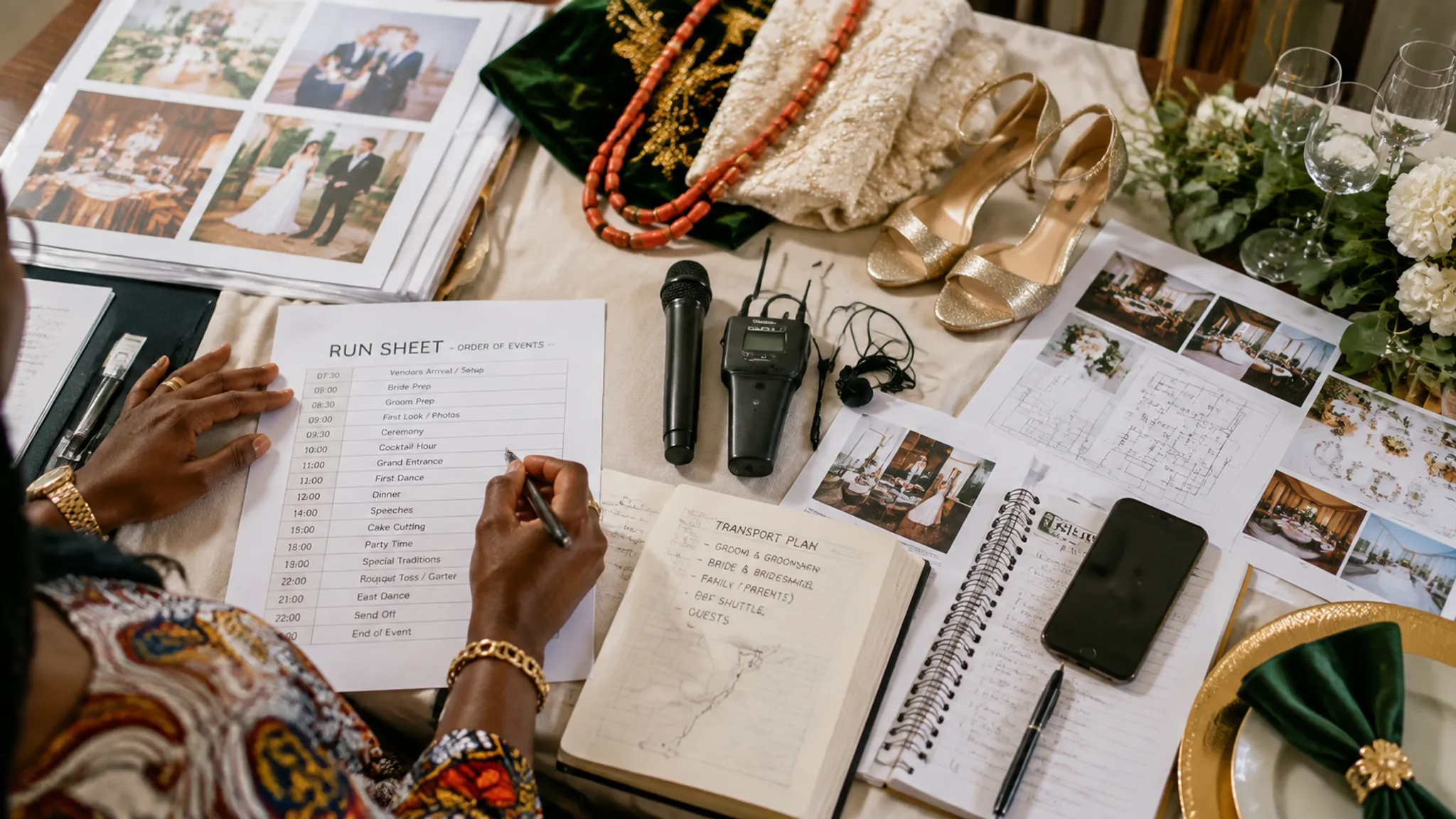
A ceremony structure becomes workable only when vendors can deliver the required transitions. Prepare one run sheet with a responsible person beside every task.
- Ceremony arrival and setup
- Family and celebrant arrival
- Registry or congregation appointment times
- Outfit changes and private preparation
- Transport between venues
- Photography windows
- Music and microphone changes
- Food preparation and service
- Guest movement and family introductions
- Reception opening and vendor breakdown
A Finnish-Singaporean wedding plan connects venue, reception, attire, food, budget, vendors, and cultural clarification. It is one external planning artifact, not general evidence about Nigerian weddings. Its useful lesson is organisational: a ceremony choice affects the rest of the event plan.
Give each dependency an owner. “The family will confirm” is incomplete unless a person has been named. “The venue will manage it” is also incomplete unless the venue has confirmed the exact service and timing.
A Practical Decision Conversation
Before booking a venue or announcing the format, hold one conversation with the couple and separate confirmation conversations with the relevant families and institutions.
The couple can begin by identifying which parts each partner wants to honour, which parts are expected by family, and which elements are cultural, religious, civil, or social. Then decide which stages should remain separate, which guests can experience together, and how much travel, waiting, changeover, financial work, and staffing the couple can coordinate.
Ask the responsible people narrower questions:
- Which part of this ceremony should remain recognisable?
- Which adaptation would be acceptable to your family?
- Who needs to be present for this stage?
- Does the congregation permit this sequence or combination?
- What does the current registry require for this appointment?
- Can the venue support the room change and timing?
- Can the vendor provide the requested service across both events?
Record the answer, the person who gave it, and the date it was confirmed. Procedural information can change, and family decisions may develop as more details become visible.
Common Confusions to Resolve Early
A shared venue is not automatically a shared ceremony
Two ceremonies can use one room while remaining distinct. The venue solves a space question, not a religious, family, or civil question.
Parallel does not mean simultaneous
Parallel events may be connected in one wedding plan without taking place at the same moment. Confirm whether the term refers to same-day sequencing, separate dates, or nearby ceremonies.
A reception does not replace every ceremony stage
Some couples combine cultural elements into the reception while keeping a civil or religious ceremony separate. Guests may experience one public celebration, while the responsibilities remain different.
Adaptation does not mean removing meaning
A shorter explanation, translated wording, different location, or revised order may help an element fit the event. The family or institution connected to it should confirm whether the change is acceptable.
Family expectation is not the same as civil procedure
A family may expect a particular custom while a registry follows its own current process. Keep these questions separate and direct them to different decision-makers.
Frequently Asked Questions
Is a shared wedding ceremony better than separate events?
Neither structure is automatically better. Compare the options by approval, participant roles, venue, timing, workload, guest access, and the boundaries each ceremony needs to preserve.
What is the difference between a shared and an integrated ceremony?
A shared ceremony may place several groups or stages within one event. An integrated ceremony usually presents those elements as one combined programme. Confirm how each family or congregation understands the proposed format before using either term in invitations.
Are parallel wedding events too complicated?
They can create additional scheduling, transport, vendor, hosting, and financial work. Build a complete event map before deciding, and treat regional comparative research as context rather than a Nigerian pattern.
Can a civil ceremony and a religious ceremony happen on the same day?
That depends on the current registry procedure, the relevant congregation, the venue, and the schedule. Confirm timing, documents, witnesses, celebrants, and the boundary between the ceremonies separately.
How can families decide what to combine?
List each proposed element, its meaning, its decision-maker, and its practical requirements. Combine it only after the relevant family, congregation, registry, venue, or vendor has confirmed the change.
Should the couple choose the venue before deciding the structure?
The structure should be clear enough to establish venue requirements first. Assess capacity, privacy, room changes, guest movement, sound, catering, access, and setup windows rather than choosing by availability alone.
What information remains uncertain for Nigerian weddings?
The available material supports comparison of ceremony models, adaptation, family negotiation, venue logic, and planning workload. It does not confirm an exact Nigerian ceremony order, Yoruba or Igbo family stage, Muslim or Christian requirement, registry procedure, civil status, or universal family expectation. Those details require current information from the relevant registry, congregation, family authorities, and Nigerian cultural or primary sources.
Make the Structure Decision
Separate the questions before selecting the format: what each partner wants to honour, what each family expects, what the congregation permits, what the current registry requires, what the venue and vendors can deliver, what guests can reasonably attend, and what workload the couple can coordinate.
One integrated ceremony may fit when participants, institutions, programme, and venue can support a genuinely shared event. Parallel events may fit when distinct ceremonies matter and the couple can manage the added transitions. Separate events may fit when cultural, religious, family, or civil boundaries need their own space.
The next handoff is concrete: name the unresolved decision, the person or institution responsible, and the date by which it must be confirmed before bookings or invitations proceed.
Sources
- Choices and Constraints Where Couples Do Not Share Religious Beliefs
- Agents and challenges associated with the celebration of parallel marriage ceremonies in Winneba township in the Efutu municipality of Ghana
- Inter-Religious Architecture for Wedding Spaces
- Independent Celebrant-Led Wedding Ceremonies: Translating, Tweaking, and Innovating Traditions
- Personalizing the Wedding: A Cross-Cultural Study of Wedding Motivations in the Keralite Indian and Southern American Communities
- Reverse Acculturation: A New Cultural Phenomenon Examined Through an Emerging Wedding Practice of Korean Americans in the United States
- Event Plan: Finnish-Singaporean Cross-cultural Wedding