Nigerian Civil and Registry Wedding Planning
A Nigeria registry wedding is one possible civil or statutory stage within a wider Nigerian wedding plan. Some couples arrange it alongside a traditional or customary celebration, a religious ceremony, a family introduction, or events planned between Nigeria and the diaspora. Others use the registry ceremony as their main wedding event.
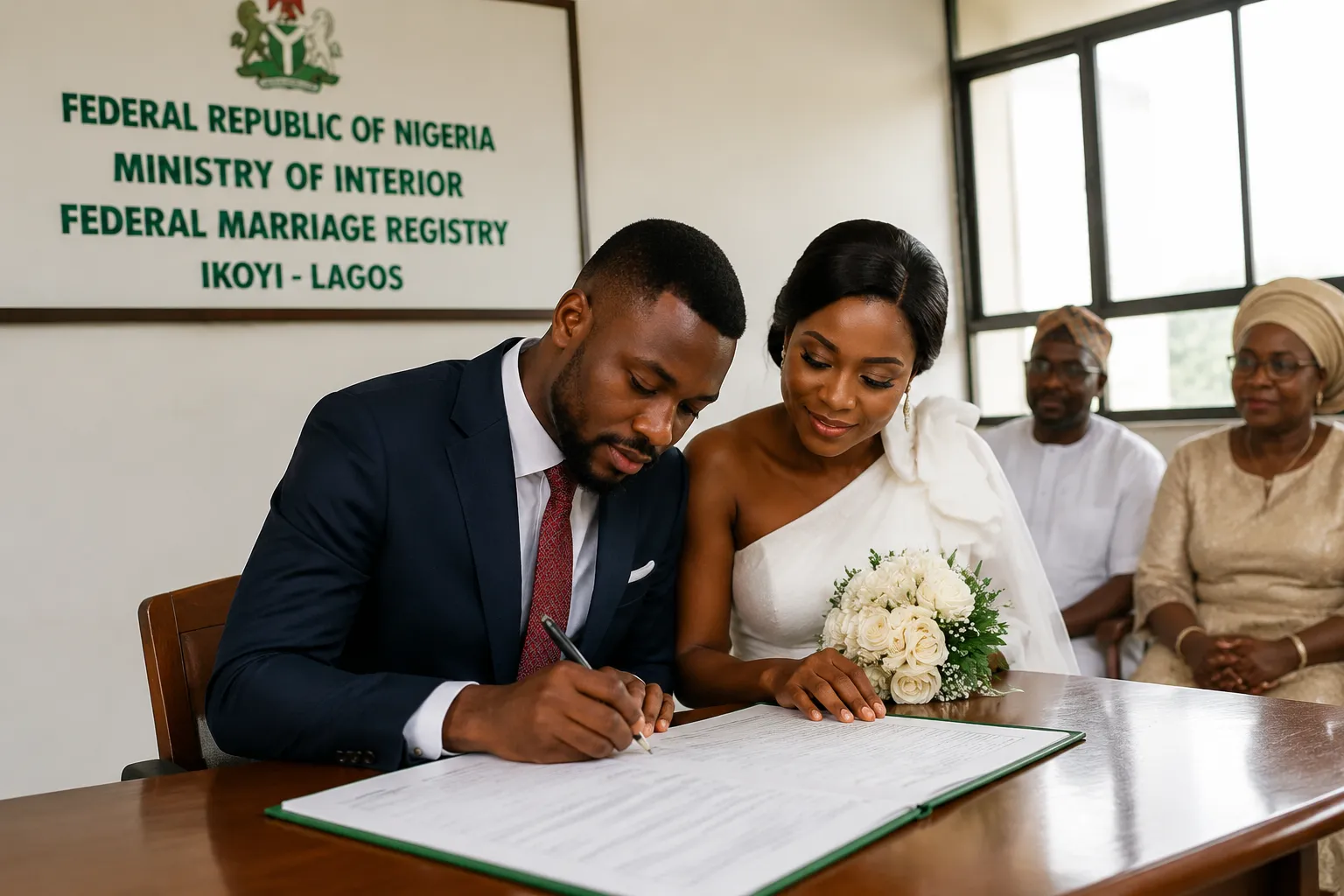
There is no single sequence for every couple. The selected registry controls its current procedure, families may shape the order and meaning of other celebrations, and a congregation sets its own religious requirements.
The practical starting point is to identify the responsible registry, request its current instructions, coordinate the couple's documents and witnesses, plan the appointment, and confirm how the marriage certificate or registry record will be collected afterward.
What a Nigeria Registry Wedding Means
Readers use several overlapping terms, including court wedding, civil wedding, registry wedding, statutory marriage, and court marriage. These phrases may refer to the same broad civil route in everyday conversation, but the terminology used by the selected registry should guide the application.
A statutory marriage is associated with the Marriage Act and the marriage registry system. The available legal materials describe a formal route involving steps such as notice, a registrar or another authorised ceremony setting, and a marriage certificate. The procedure depends on the authority responsible for the ceremony and the way the current process is implemented in that jurisdiction.
A church ceremony is not automatically the same administrative event as a registry ceremony. Some licensed places of worship may conduct marriages within a statutory framework, while a religious celebration may also involve separate preparation and conditions. Confirm the distinction with both the relevant registry and the congregation.
Customary and Islamic marriages belong to different pathways, with their own family, community, religious, or local authority contexts. Couples may combine customary, Islamic, religious, and statutory stages. The phrase “double-decker marriage” appears in public and academic discussion of some combinations, but the label does not settle the procedural or legal questions for a particular couple.
Treat the name as a planning term, not as a complete explanation of what has taken place.
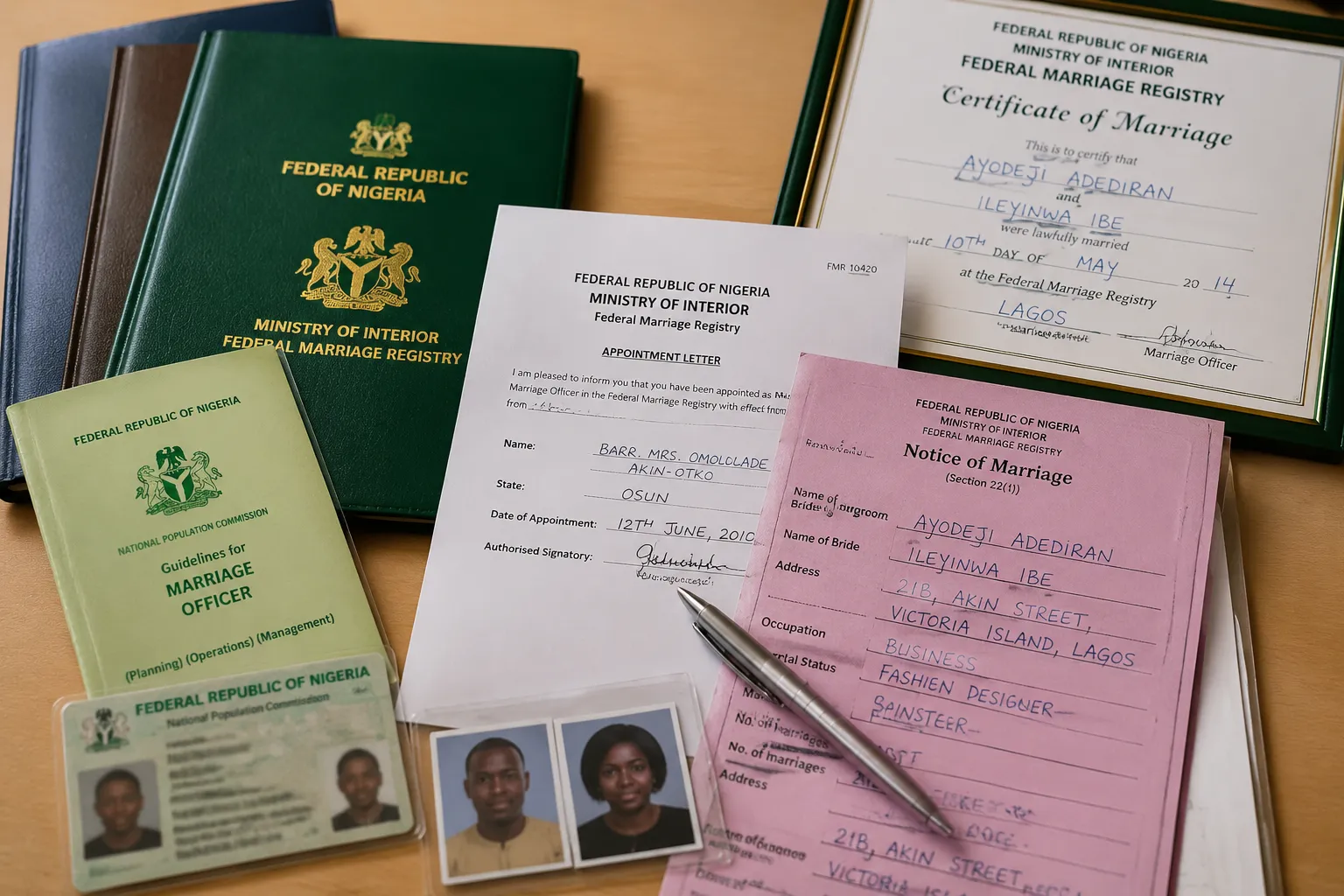
How the Ceremony Paths Can Relate
A Nigerian wedding may involve several groups whose responsibilities do not overlap completely:
| Person or institution | Planning responsibility |
|---|---|
| The couple | Coordinate documents, decisions, witnesses, dates, travel, and communication. |
| The selected registry | Confirm the current civil procedure, documents, fees, appointments, venue arrangements, and record follow-up. |
| Families | Organise introductions, customary negotiations, gifts, traditional attire, and family celebrations according to their own practice. |
| A religious body | Set its own preparation, eligibility, ceremony, and record requirements. |
| Vendors and coordinators | Arrange clothing, photography, transport, food, reception timing, and other event logistics. |
One possible sequence might place a family introduction or customary celebration before the registry appointment, followed by a religious ceremony or reception. Another couple may begin with the civil stage and arrange family or religious events later. A diaspora couple may plan a registry visit in Nigeria around travel, family availability, and a later celebration elsewhere.
These are examples, not national rules. The order should be discussed with the people and institutions responsible for each stage.
Before announcing a date, clarify:
- Which event does each family regard as the marriage ceremony?
- Which stage requires the couple to be present in person?
- Does the selected registry need a separate appointment from a religious or customary event?
- Does the congregation require evidence of a civil or customary ceremony first?
- Which record will each institution issue?
- Will names and dates used across the documents match?
The aim is to keep family expectations, religious preparation, and civil procedure visible without treating them as one process.
A Practical Nigeria Registry Wedding Route
A workable route usually has seven connected stages:
- Identify the relevant registry or jurisdiction.
- Request the current application and document instructions.
- Clarify notice, publication, appointment, and payment arrangements.
- Prepare the couple's documents and resolve name or date differences.
- Confirm witness eligibility and attendance.
- Prepare for the ceremony appointment.
- Collect and inspect the certificate or registry record, then ask about corrections or additional copies.
The Ministry of Interior marriage portal uses service language associated with ordinary and special marriage applications, document verification, certified copies, and changes of venue. Those categories are useful starting points, but prices, locations, operating details, and service coverage can change. They should not be treated as a permanent checklist for every registry.
The available public reference material is not sufficient to establish one complete current list of documents, fees, notice timing, witness rules, appointment availability, jurisdiction, venue requirements, or certificate collection arrangements for every Nigerian registry.
Use published information to identify the questions you need answered, then obtain confirmation from the specific registry before committing money, travel, or related events.

Key Decisions Before Fixing the Date
Choosing a Registry and Jurisdiction
Start with the authority expected to conduct or record the civil ceremony. Do not select a registry only because its name appears frequently in wedding discussions or social media. The available material does not establish a nationwide hierarchy of registries, a universal residence rule, or a general requirement to travel to one prominent location.
Ask the registry which office is responsible for the application, whether it accepts couples connected to that location, how that connection is assessed, and whether the ceremony is held at the registry office, another approved venue, or both. Also ask whether ordinary and special applications are handled differently, whether a change-of-venue service is available, and which official channel publishes current instructions and payment details.
For a mixed-nationality or diaspora couple, ask the registry to review the situation before the date is fixed. Nationality, prior marriage history, name documents, or time spent outside Nigeria may affect which documents the office asks to inspect. The available sources do not support one universal list for these cases.
Keep a record of the office contacted, the date of the response, the official channel used, and any application reference. This helps when relatives, planners, and travel coordinators are working from the same information.
Preparing Registry Wedding Documents
Document preparation is a coordination task, not a matter of copying another couple's checklist. Request the current list directly from the selected registry and ask which items apply to each partner.
Confirm whether the office wants originals, photocopies, certified copies, translations, photographs, affidavits, evidence relating to age or a prior marriage, or other supporting material. Do not assume that an item mentioned by a secondary guide applies to every registry.
- Compare names across identity and civil documents.
- Check dates and places of birth for consistency.
- Explain previous names through documents accepted by the registry.
- Make sure copies are clear and complete.
- Ask how translations and certifications should be prepared.
- Separate documents required for the registry from those requested by a congregation or another authority.
- Confirm how foreign-issued documents should be presented.
If a discrepancy appears, ask the issuing authority or registry what correction or supporting document is appropriate. Do not rewrite a document to make it match another record.
Some public guidance discusses age, prior marriages, consent, and other statutory matters, but the available reference set does not justify publishing a complete current eligibility or document list for all registries. A qualified local professional may be needed where a document problem could affect legal status.
Planning Notice, Application, and Appointment Timing
Notice is a distinct planning stage. It should not be reduced to a number copied from an online article.
The reproduced Marriage Act discussed in the research describes a notice and publication scheme involving a marriage notice book and publication at the registrar's office. It also describes a period of three months after notice in a statutory context. Several weaker or secondary sources repeat a twenty-one-day figure. These references should not be merged into one universal deadline.
Ask the selected registry how notice is submitted and published, what date starts the relevant period, what happens if notice expires, and whether an application can be amended after submission. Confirm how fees are paid, when the ceremony date is confirmed, and whether the appointment route is online, in person, or both.
For planning purposes, “marriage notice in Nigeria” means establishing what the selected office currently means by notice, how it records the application, and which dependencies affect the ceremony date. Do not book flights, reception venues, religious ceremonies, or family travel around an unverified interpretation.
Coordinating Registry Wedding Witnesses
Witnesses are part of the civil ceremony plan, but the available material does not establish one universal witness count, eligibility rule, identification requirement, or attendance format for every Nigerian registry.
Choose possible witnesses early enough to check their availability. Ask the registry how many are required, whether identification is needed, whether there are age or eligibility conditions, whether they must attend in person, and which documents or records they sign. Also ask whether a witness can be replaced after submission and what happens if someone is delayed or unavailable.
Give each confirmed witness the arrival time, location, identification instructions, expected role, and relevant registry reference. Keep this separate from the guest list. A reception guest may not be serving as a civil witness.
If a family member will also witness a traditional or religious stage, clarify which event that role applies to. Attendance at several events does not necessarily mean the person has the same formal responsibility at each one.
Preparing for the Civil Ceremony Day
Once the registry confirms the appointment, build a short ceremony-day plan around its instructions. Confirm the arrival and entry procedure, documents and originals to bring, witness attendance and identification, photography or video permissions, dress expectations, guest limits, transport, and the process for a late arrival or date change.
Ask whether the certificate is issued or collected on the day and which contact should handle an emergency query. Do not treat details reported by another couple as registry requirements. A user account may suggest useful questions about multiple visits, date selection, ceremony attendance, certificate collection, or refreshments, but it cannot establish a nationwide practice.
Keep ceremony-day arrangements proportionate to the confirmed setting. The registry appointment may be one stage of the wedding rather than the entire family celebration. Coordinate the reception, attire changes, photography, and traditional or religious elements around the time the civil appointment actually permits.
Following Up on the Certificate or Registry Record
Certificate follow-up belongs in the plan before the ceremony takes place. Ask whether the certificate is issued immediately or collected later, who may collect it, whether identification or an application reference is required, and how to request a certified copy or duplicate.
Also ask how errors in names, dates, or places are reported, who handles correction or reissue requests, how the couple can confirm that the record has been filed, and which authority handles later searches or copies.
The available Marriage Act material describes a marriage certificate being filed in a marriage register and refers to searches and certified copies subject to the applicable fee. Ministry of Interior service material also uses terms associated with certified copies and certificate services. These references establish useful record-keeping questions, but not one current follow-up process for every registry.
Inspect the issued document before leaving or as soon as it is received. Compare names, dates, and other particulars with the couple's approved documents. If something is incorrect, ask the issuing authority how it should be corrected. Keep the certificate, receipts, application references, and correspondence in more than one secure location.
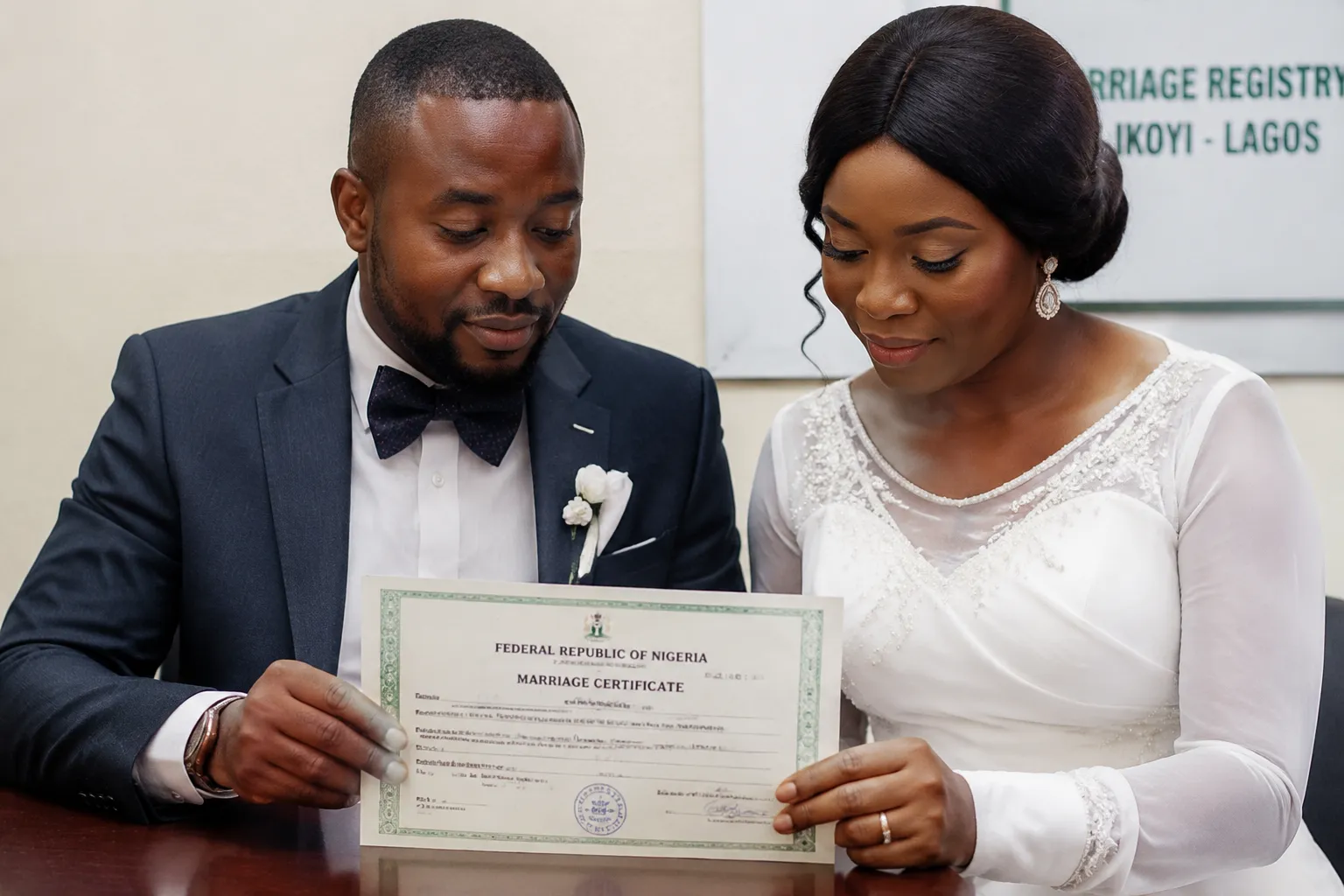
Planning Civil, Customary, and Religious Events Together
A registry wedding can sit beside a Yoruba, Igbo, Hausa/Fulani, Muslim, Christian, multicultural, or diaspora celebration without making those events interchangeable. Their names, participants, rites, records, and responsible authorities may differ.
Discuss the following with both families and the relevant institutions:
- Which ceremonies are being planned and what each represents to the families.
- Who is expected to attend, speak, provide gifts, or coordinate each stage.
- Which attire, introductions, family meetings, or negotiations belong to each event.
- Which dates are controlled by a registry, congregation, travel plan, or family calendar.
- Which documents must be shown to another institution.
- Who has authority to change each date or requirement.
For Muslim or customary pathways, do not assume that civil registry terminology answers questions about religious or community documentation. Research on Islamic marriage certification describes variation in documentation and the practical importance some people attach to reliable records. It does not establish one religious or customary procedure across Nigeria.
For Christian ceremonies, confirm requirements with the specific congregation. A church event may have its own preparation and may or may not be conducted within a statutory framework, depending on the institution's status and procedure.
For diaspora couples, coordinate Nigerian registry instructions with the requirements of any foreign authority through that authority or a qualified professional. The available sources do not support broad conclusions about international recognition or immigration outcomes.
Shared Planning Record
Before committing to a date, keep one shared record containing:
- The selected registry and responsible jurisdiction.
- The official information channel used and the date instructions were confirmed.
- Each partner's document list, including questions about originals, copies, translations, and certifications.
- Notice and publication instructions, application steps, payment records, and rescheduling terms.
- The appointment date, witness details, identification, and attendance confirmation.
- Ceremony-day restrictions and certificate issue or collection instructions.
- Correction, certified-copy, and reissue contacts.
- Dates and responsibilities for customary, religious, family, and diaspora events.
A planner or relative can organise this record, but the couple should know which decisions the registry has confirmed and which remain family preferences or vendor arrangements.
Common Planning Mistakes
- Applying one registry's process everywhere. A document list, fee, witness practice, notice period, or venue rule from one location may not apply elsewhere.
- Using “court wedding” as the whole procedure. The phrase may be useful search language, but it does not identify the responsible authority, appointment process, or certificate timing.
- Fixing the wider celebration first. Application review, notice handling, appointment availability, and rescheduling can affect the wedding calendar.
- Combining records without checking. Civil, customary, and religious events may involve different authorities and documents.
- Relying on a repeated twenty-one-day figure. Ask the selected registry how notice is calculated and what happens if the period expires.
- Leaving certificate follow-up until much later. Confirm collection, correction, replacement, and copy procedures before the ceremony.
Questions Readers Commonly Ask
- Is a Nigeria registry wedding the same as a court wedding?
- These are overlapping public terms for many readers. The selected registry's terminology and procedure should control because everyday labels do not establish the exact administrative route.
- Can a registry wedding be combined with a traditional or customary wedding?
- Some couples combine civil, customary, religious, and family events. The available sources do not establish one universal order, so discuss the sequence with the relevant families, registry, congregation, and qualified professional where a legal issue is involved.
- Is a twenty-one-day notice period always required?
- The available material is inconsistent. Secondary sources repeat twenty-one days, while the reproduced statutory material describes a different three-month concept after notice. Ask the selected registry how notice is submitted, published, timed, and affected by expiry or rescheduling.
- What documents are needed for a registry wedding in Nigeria?
- There is no reliable universal checklist in the available reference set. Request the current list from the chosen registry and ask which requirements apply to each partner, especially where there are prior marriages, foreign documents, name changes, or time spent outside Nigeria.
- Do registry wedding witnesses need identification?
- Witness instructions may vary. Confirm the number, eligibility, identification, attendance, and signing requirements directly with the selected registry.
- When is the marriage certificate collected?
- The process may depend on the registry and service used. Ask whether the certificate is issued at the ceremony or collected later, who may collect it, and how certified copies, corrections, or reissue requests are handled.
- Does a church wedding replace a registry wedding?
- Not automatically. A religious ceremony and a statutory registry process may overlap in some settings, but they are not automatically the same administrative event. Confirm the congregation's requirements and the statutory authority's procedure.
- Does a couple need to travel to Ikoyi for a registry wedding?
- The available material does not establish a universal requirement to use Ikoyi or any other prominent registry. Ask the relevant registry about jurisdiction, coverage, appointment access, and venue rules.
The registry wedding is one stage with its own authority and records. Keeping that stage distinct while coordinating it respectfully with family, customary, religious, multicultural, and diaspora plans gives the couple a clearer next conversation and a more dependable planning record.
Sources
These sources support the procedural context and limitations discussed above. Current details should still be confirmed with the selected registry.
- Home | Marriage Portal - Ministry of Interior
- Marriage Act of Nigeria (document, English) | Women's Learning Partnership
- How to register a marriage in Nigeria | Australian Embassy
- Formality of Statutory Marriage in Nigeria: Need for a Policy-Driven Construction of the Marriage Act
- A Critical Appraisal of the Concept of Double-Decker Marriage under the Nigerian Family Law