How Much Time to Leave Between Traditional, Civil, and Religious Ceremonies
Leave enough time for the slowest confirmed part of your wedding plan. That may mean several hours, consecutive days, or separate dates.
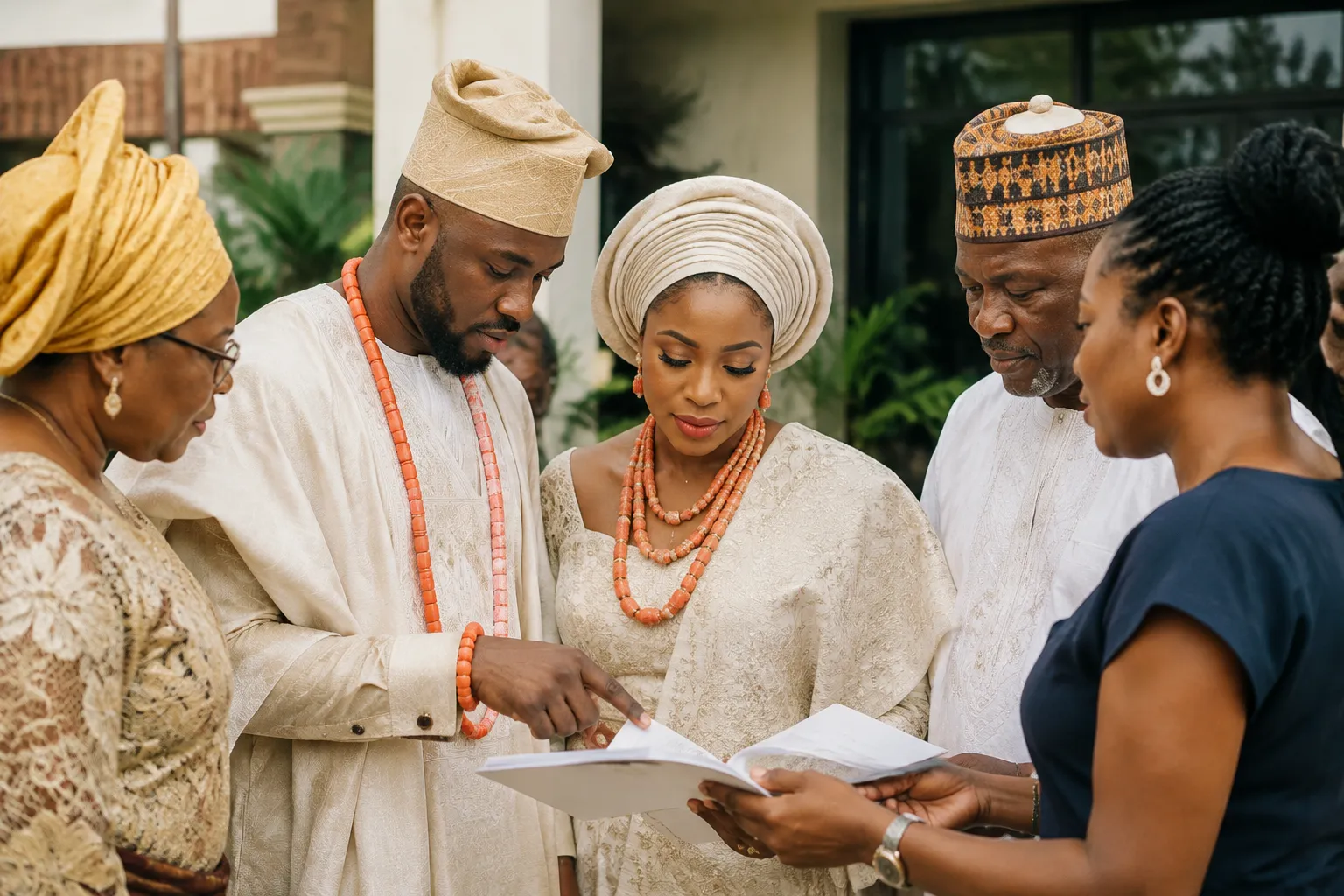
A same-day plan needs firm ceremony times, short journeys, and realistic changeover periods. Consecutive days reduce pressure while keeping events within one trip. Separate dates are usually more workable when family arrangements, registry appointments, congregation preparation, travel, or venue access remain unsettled.
No available research establishes a national minimum time between wedding ceremonies in Nigeria. The interval should come from the requirements and schedules confirmed by the people responsible for each stage.
Choose the Spacing That Fits the Dependencies
Same-Day Ceremonies
A same-day programme may include traditional, civil, and religious stages followed by a reception. Ethnographic research in Ibadan records a same-day arrangement as one observed pattern, not a timetable for other couples.
This option places travel, clothing changes, photography, formal proceedings, and vendor movement within a limited period. A delay during the first stage can affect every later booking.
Before choosing the same day, confirm:
- The registry appointment and required arrival time
- The congregation's ceremony time and preparation conditions
- The expected length of the family programme
- Travel and parking time under likely traffic conditions
- Venue access for setup, dressing, photography, and guest arrival
- How shared vendors will move between locations
- Time for meals, rest, and clothing changes
- Which flexible activities can move if a fixed stage runs late
Do not build this schedule around ideal travel times. Ask the driver, photographer, venue coordinator, and ceremony leads how much transition time they need.
Consecutive-Day Ceremonies
Consecutive days keep the celebrations within one trip while giving each ceremony more room. One possible sequence is a family ceremony on the first day, followed by the civil or religious stage on the next.
The order still needs confirmation. Research describes variation in family participation, cultural structure, and church-family coordination rather than one national sequence.
This arrangement may suit couples when:
- Relatives cannot travel for several separate dates
- The family programme needs substantial hosting time
- Clothing, photography, or venue changes would overload one day
- The registry and congregation can provide adjacent dates
- Essential vendors and participants can attend both events
- Accommodation is available near the venues
Protect the overnight preparation period. A late first event can affect transport, equipment handling, styling, and punctuality the following morning.
Ceremonies on Separate Dates
Separate dates provide the most flexibility when different people control different stages. Family representatives may direct customary arrangements, while the registry and congregation each control their own procedures and calendars.
The gap might be short or extend across a longer period. Sources do not support a fixed number of days or weeks that suits all Nigerian weddings.
Separate dates may be more practical when:
- A suitable registry appointment is not available near the celebration date
- Documents or procedural steps are still being clarified
- The congregation has preparation or scheduling conditions
- Essential relatives need more time to travel
- The ceremonies will take place in different cities or countries
- The couple needs to distribute expenses across different periods
- Venues or essential vendors are unavailable during one weekend
More time changes the coordination problem but does not remove it. Agree which date receives the larger guest list, reception, photography coverage, or shared vendor team before each event expands into a separate full celebration.
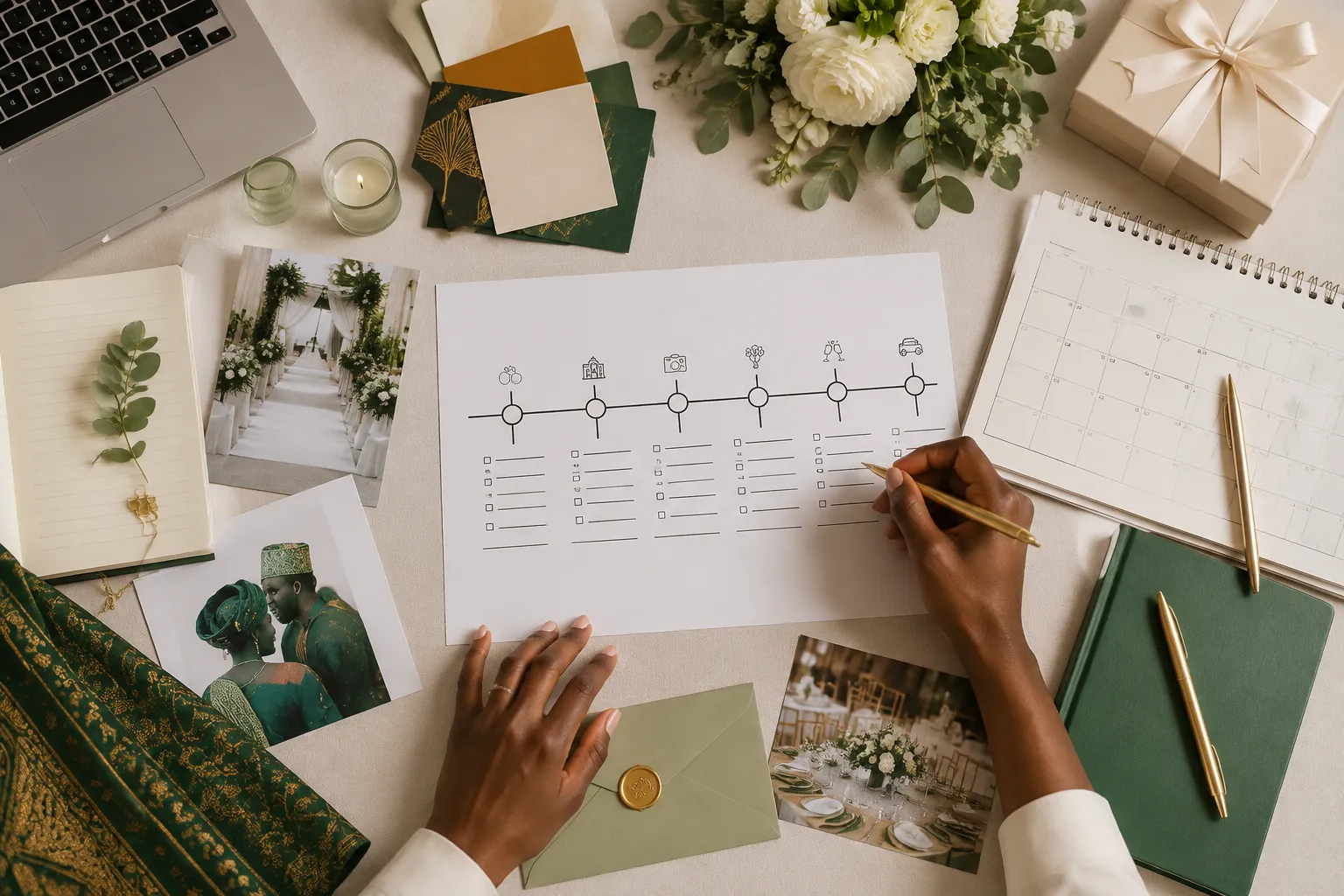
Let the Longest Unresolved Item Set the Interval
List each ceremony stage, what must happen before it, and who can settle that condition. The longest unresolved dependency usually determines the workable gap.
| Ceremony stage | What to settle | Person or institution to ask | Possible scheduling effect |
|---|---|---|---|
| Traditional ceremony | Family sequence, participants, items, and preferred date | Both families and the people directing the ceremony | May determine the earliest family-agreed date |
| Civil ceremony | Current appointment process, documents, location, and attendance instructions | The registry or jurisdiction handling the appointment | May create a fixed date or preparation window |
| Religious ceremony | Preparation, approvals, ceremony order, and officiant availability | The specific congregation or faith authority | May affect both the sequence and available dates |
| Reception | Access, setup, capacity, and closing time | The venue coordinator | May limit same-day transitions |
| Photography and video | Coverage hours, portraits, travel, and equipment movement | The photography and video teams | May require more time between locations |
| Guest transport | Distance, traffic, parking, and boarding time | The transport coordinator or responsible relatives | May require a wider transition window |
| Shared vendors | Setup, dismantling, travel, and staffing | Each affected provider | May prevent quick changes or adjacent bookings |
For example, both families may agree on their programme while the civil date remains uncertain. In that case, invitations should not present the registry time as settled.
Confirm the Sequence Before Booking Around It
Traditional, civil, and religious ceremonies do not serve identical functions. The families, registry, and congregation may also understand their order differently.
Legal scholarship distinguishes statutory procedure from customary, religious, and social ceremonies. Cultural studies likewise describe variation in Yoruba and Igbo marriage practices. This context explains why order can matter, but it does not establish one sequence for another family, registry, or faith community.
Ask each decision-maker a specific question.
For Both Families
Which family stages should be completed before the other ceremonies, and who will say when those stages are complete?
For the Registry
What is the current appointment and document process for our chosen location, and when can we treat the ceremony date as confirmed?
For the Congregation or Faith Authority
What preparation or approvals apply to us, and does this congregation expect a particular ceremony sequence?
For the Venue and Vendors
How much time is required for access, setup, travel, clothing changes, portraits, guest movement, and equipment transfer?
These answers separate family expectations from civil procedure, religious preparation, and commercial scheduling. They can also reveal conflicts before deposits, invitations, and travel bookings make the plan harder to change.
Test a Same-Day Programme from Arrival to Closing
Count the full working day, not only the advertised ceremony durations. Include waiting, transitions, and the tasks that happen out of guests' view.
- Record the first required arrival time.
- Add waiting time for relatives, witnesses, or officiants.
- Allow for the complete family programme.
- Include group photographs after each stage.
- Add clothing, styling, and private preparation time.
- Allow for loading people and equipment into vehicles.
- Estimate travel, parking, and walking between locations.
- Include access checks and setup at the next venue.
- Protect time for meals, water, and rest.
- Add a delay allowance before the next fixed appointment.
Mark each time as fixed or movable. A registry appointment, congregation booking, or venue closing time may offer less flexibility than portraits or reception entrances.
If the programme works only when every stage starts immediately and finishes early, it is too compressed. Move one stage to another date or reduce the number of transitions.
Common Timing Misunderstandings
The Traditional Ceremony Has to Come First
That order is significant in some families and appears in some reported arrangements. It is not a universal sequence for Nigerian families, registries, or congregations.
Ask the family representatives and each relevant institution before fixing the order.
A Religious Ceremony Replaces the Registry Process
Do not treat religious and civil stages as interchangeable without direct confirmation. Questions about documents, registration, recognition, or marriage status belong with the relevant registry or jurisdiction and, where needed, a qualified local professional.
For planning purposes, record the congregation's process and the registry's process separately.
Holding Everything on One Day Will Reduce Costs
Combining dates may reduce repeated travel or hosting. It may also require extended vendor coverage, more vehicles, rapid venue changes, and additional assistants.
Ask for separate quotations for the same-day and split-date plans before comparing them.
A Longer Gap Solves the Coordination Problems
Extra time helps only when responsibilities are clear. Unsettled documents, family expectations, or officiant availability remain unresolved regardless of the calendar gap.
Assign each outstanding confirmation to a named person and a target date.

Set the Final Time Between Wedding Ceremonies
- Ask both families about the expected sequence, essential participants, and preparations.
- Check the current appointment and document process with the registry handling the ceremony.
- Ask the congregation about preparation, approvals, order, and available dates.
- Map travel, parking, dressing, setup, photography, and guest movement.
- Check shared vendors for staffing, equipment, and travel conflicts.
- Compare same-day, consecutive-day, and separate-date plans.
- Remove any option that depends on an unsettled assumption.
- Distribute the timetable only after the fixed stages are confirmed.
The workable answer may be several hours, the following day, or separate dates. Before fixing the gap, obtain clear answers on the family sequence, registry process, congregation conditions, venue access, and vendor movement time.
Settle the order before you book around it.
Sources
- This is who we are and why!: Ethnography of weddings in Ibadan, Nigeria
- Generic structure and pragmatic acts in Yoruba traditional weddings in Southwestern Nigeria
- Formality of Statutory Marriage in Nigeria: Need for a Policy-Driven Construction of the Marriage Act
- Ethical Dilemmas in Contemporary Igbo Christian Marriages: Navigating Modernity and Cultural Identities
- The Changing Nature and Patterns of Traditional Marriage Practices among the Owerre-Igbo, a Subgroup of the Igbo of Southeast Nigeria
- Social media pressures on cultural authenticity in traditional Igbo wedding