Guest Context and Multicultural Wedding Wording
When a wedding brings together different families, faiths, languages, or ceremony traditions, the program has to do more than list timings. It needs to show guests what is happening, who is leading each stage, and how they may participate without turning one family practice into a universal rule.
The practical decision is straightforward: identify the ceremony stages, separate guest information from institutional or family decisions, and assign each wording choice to the person who can confirm it.
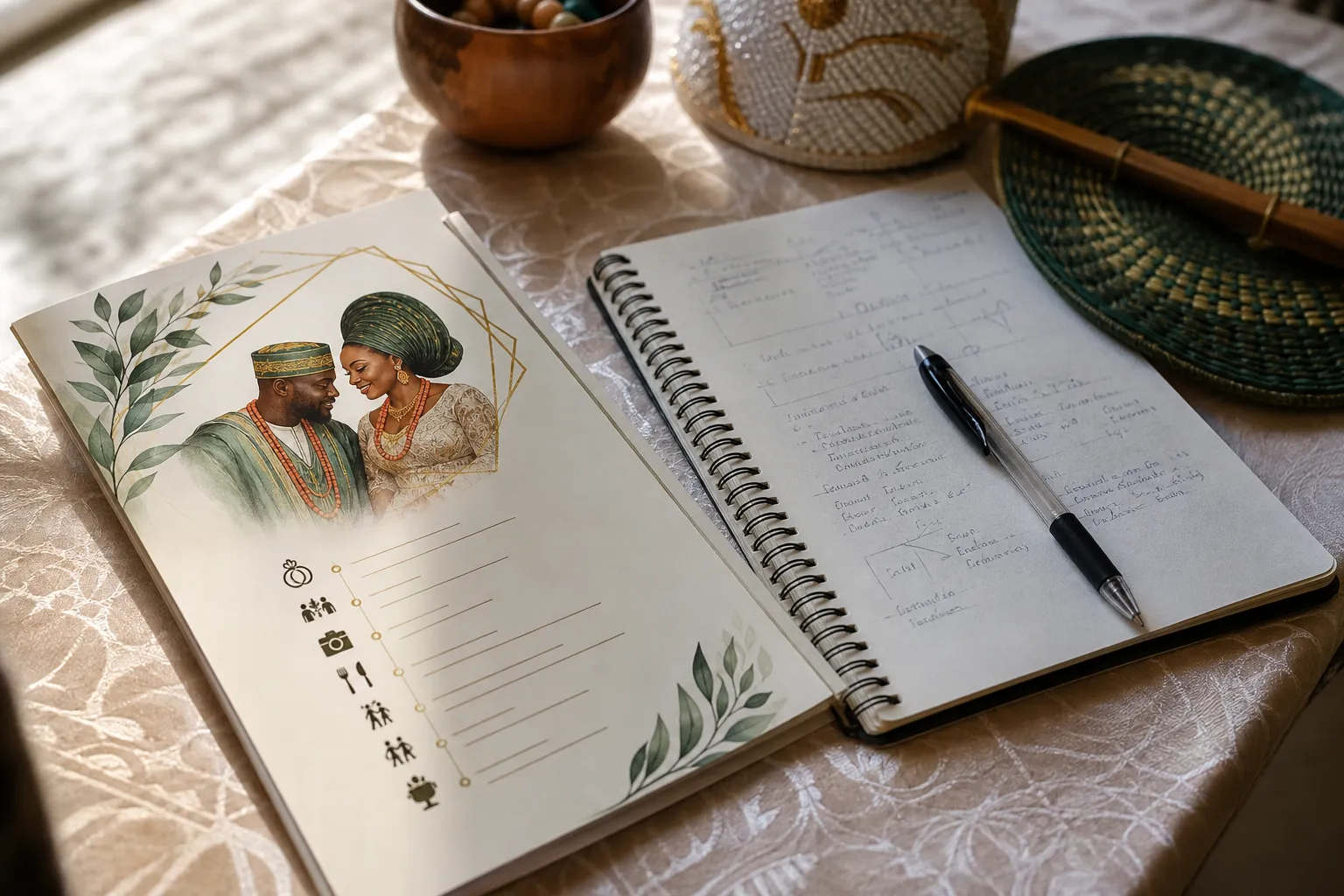

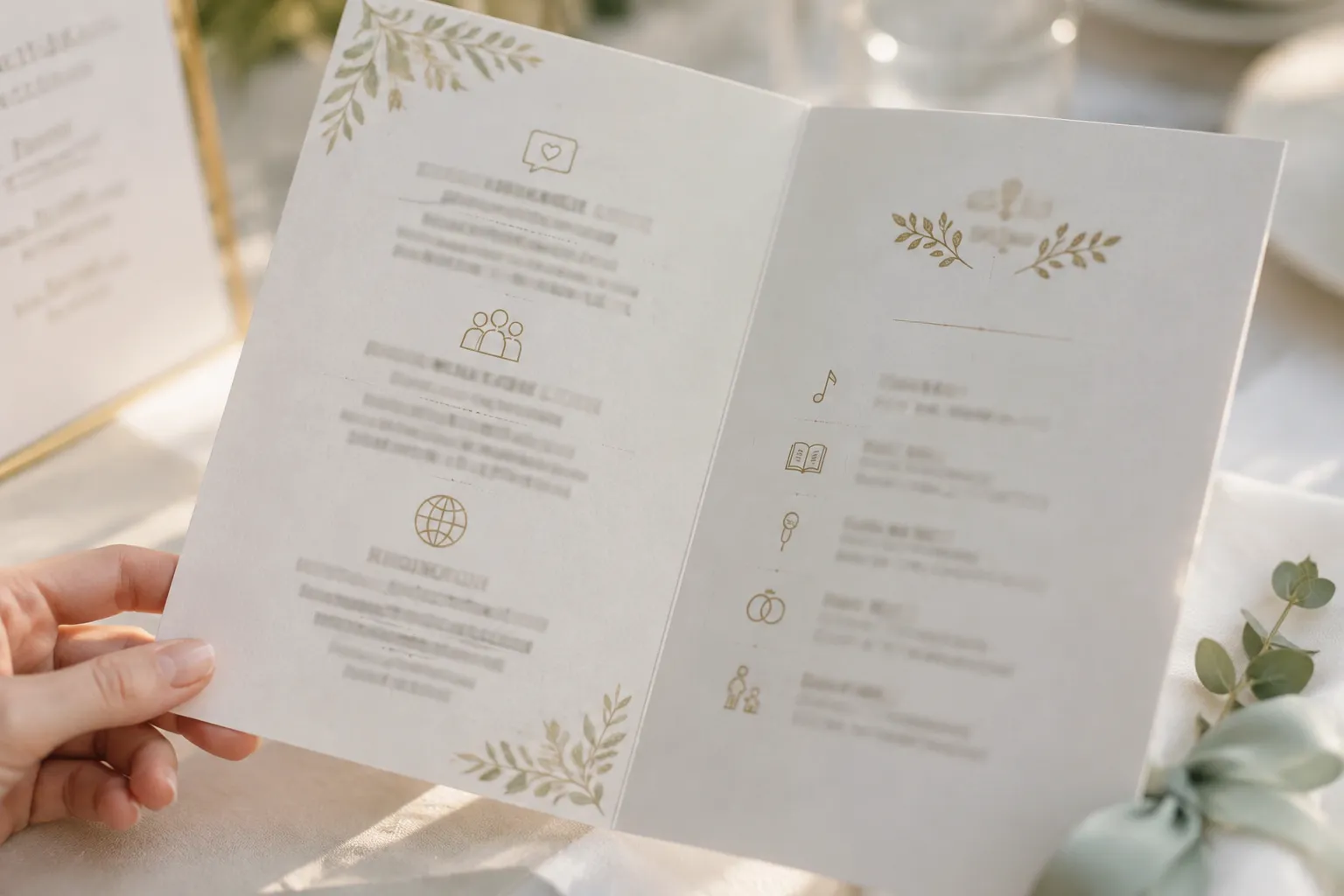
More specific pages
These pages continue the topic in smaller, more specific directions.
What Changes the Program?
The label “multicultural” does not determine the format. The ceremony setting, people responsible, guest mix, language choices, and relationship between separate events shape the wording.
Start With the Ceremony Setting
A civil ceremony, religious ceremony, traditional ceremony, family gathering, blessing, and reception may appear in one program or take place on different days. Guests should be able to tell which segment they are attending and whether it is led by a registry, congregation, celebrant, family representative, or host.
Keep symbolic, family-led, religious, and civil elements distinct in the program. A program can describe how the day is arranged, but it should not decide the legal status of a ceremony or imply that a registry or faith body has accepted wording that has not been confirmed.
Use the current information supplied by the relevant registry, congregation, celebrant, or family representative.
Map the People Responsible
Several people may own different parts of the program. Their roles should not be treated as interchangeable simply because they appear in the same schedule.
- The couple approves personal statements, the overall tone, and the sequence they have agreed to present.
- Each family confirms names, greetings, gifts, family roles, and descriptions connected to its contribution.
- A congregation or religious leader reviews wording about religious actions, responses, posture, and participation.
- A registry or civil provider confirms current procedural details within its responsibility.
- The celebrant or host confirms introductions, timing, transitions, and announcements.
- The person preparing the program checks that translations and guest instructions match the approved sequence.
This responsibility map prevents the program from settling a question that belongs to a family, congregation, registry, or provider.
Write for the Guests Actually Attending
Guests may understand one cultural or religious tradition but not another. They may also differ in language, age, travel experience, and familiarity with the couple’s families.
Guest context wedding wording should answer the question a person has at that moment. A brief explanation can identify a ceremony segment, name its leader, explain a transition, or state whether participation is invited.
It does not need to explain an entire culture. Broad descriptions can flatten differences between families, regions, religious communities, and diaspora experiences.
How to Structure a Multicultural Wedding Program
A program usually works best when it follows the event as guests experience it. The couple and the relevant family or ceremony leader decide the actual order, particularly when several stages are combined.
One possible structure is:
- Welcome and a short note introducing the day’s different ceremony elements.
- Names of the couple, celebrant, family representatives, witnesses, and other named participants.
- The first ceremony stage and its purpose in plain language.
- Readings, prayers, greetings, processions, exchanges, gift presentations, or family contributions.
- A clear transition between civil, religious, traditional, family-led, and reception elements.
- Guest participation guidance, including whether guests may stand, sing, respond, observe, or remain seated.
- Reception details such as food service, speeches, outfit changes, photography, music, or dancing.
- A closing direction to the host or coordinator for practical questions.
This is a planning framework, not a fixed sequence. A traditional stage may come before a registry ceremony, after it, or on another day. The program should show the confirmed schedule rather than reproduce a generalized wedding order.
Use Labels That Describe the Function
Section labels help guests follow the event without assigning a meaning the family or ceremony leader has not approved. Depending on the confirmed wording, labels might include:
- Family welcome
- Traditional engagement segment
- Civil ceremony
- Religious blessing
- Reading and reflection
- Couple’s vows
- Family gift presentation
- Reception welcome
- Guest participation
A family or congregation may prefer another name, or may keep a term in its original language. Ask the person leading the segment whether the chosen label carries a specific meaning.
Explain Transitions Directly
Transitions matter when optional religious participation or more than one ceremony tradition appears in the same event. A short sentence can remove uncertainty without explaining more than guests need.
The next segment is a family blessing. Guests may observe quietly, and participation is optional.
We now move from the civil ceremony to a separate religious blessing led by the couple’s invited faith representative.
Guests are welcome to join the song, remain seated, or observe according to personal preference.
These are wording models, not instructions for a particular faith community. The relevant celebrant, congregation, or family representative should confirm that the description matches the actual segment.
Wording for Optional Religious Participation
Guests may interpret an invitation as an obligation when a program uses broad language around prayer, singing, ritual movement, or responses. State what is happening and identify the available ways to take part or observe.
For each religious segment, distinguish between being present, listening, responding, singing, praying, receiving a blessing, and joining a ritual action. These are not interchangeable forms of participation.
Instead of writing “everyone will join the prayer” before that expectation has been confirmed, use wording that accurately describes the invitation:
A prayer will be offered during this segment. Guests may participate in the manner that is comfortable for them.
The couple welcomes guests to join the hymn. Listening quietly is also appropriate.
A blessing will be offered by the family’s faith representative. Guests may remain seated unless invited to stand.
The final language should match the ceremony itself. A congregation may have its own expectations for responses, posture, dress, or participation. Those details belong with the relevant religious leader rather than a generic multicultural wedding template.
Separate Inclusion From Religious Permission
A couple may want guests from different backgrounds to feel included. That intention does not determine what a religious ceremony permits, expects, or recognizes.
The program can explain the guest-facing choice while leaving the religious determination to the appropriate authority. For example, it may say that guests are invited to observe a blessing, while the congregation confirms its form and placement.
The same distinction applies when a religious element appears alongside a civil or traditional ceremony. The program can show where one segment ends and another begins without making a procedural or legal conclusion.
Language, Translation, and Participation
Participation instructions should be specific enough to help guests, but modest enough to respect personal choice. The same action may be familiar to one group and unfamiliar to another.
Before finalizing each participatory segment, confirm five points:
- What happens?
- Who leads it?
- Who may participate?
- What should guests do if they do not participate?
- Which language or translation will be used?
If several languages are used, decide whether the program will include parallel translations, a short explanation, transliteration, or the original wording followed by a summary. The couple and the people leading the segment should approve translations of names, blessings, readings, and ceremonial terms.
Do not replace a culturally specific term with the nearest English word without checking its intended meaning. A concise explanation may be more accurate than a substitute label.
For example, a program might retain the name of a family ceremony and add “a family-led engagement segment.” That gives guests useful context without claiming that the segment has one identical meaning in every family.
Family Expectations and Program Approval
Family expectations may shape which traditions appear, who is named, and how a ceremony stage is introduced. Those decisions may be invisible to guests, so the couple needs a review process before the wording is printed or distributed.
Use separate conversations for separate decisions. Ask each family to confirm names, roles, greetings, gifts, attire references, and ceremony terms connected to its contribution. Ask the celebrant or religious leader to review participation language, and ask the venue or provider to confirm timing and practical transitions.
A respectful question is often more useful than a broad etiquette rule:
- Which parts of this segment should guests understand before it begins?
- Is participation invited, expected within this ceremony, or simply available?
- Who should be named as leading or presenting this stage?
- Does the English description preserve the family’s intended meaning?
- Should this segment be described as a tradition, blessing, welcome, or family decision?
- Does the ceremony leader have a preferred term or translation?
- Does the current schedule place this before or after the civil ceremony?
Record the answer and the person who confirmed it. That small handoff helps prevent a late edit from changing a family role or implying a participation requirement.
A Bounded Yoruba Example
Research on Yoruba traditional weddings in Southwestern Nigeria describes a sequence that may include a groom’s family entrance, opening prayer, thanksgiving, a proposal letter, the groom’s entrance, the bride’s entrance, gift presentation, bride-price payment, and closing prayer. The study also describes variation shaped by culture, religion, western education, and the creativity of wedding hosts.
This is useful for showing why ceremony-sequence planning needs named stages and responsible participants. It does not establish the order for every Yoruba wedding, Nigerian wedding, or multicultural celebration.
If a couple draws from a Yoruba family practice while also planning a civil, church, mosque, or other ceremony, the program should identify the stages confirmed for that family. It should not copy a published sequence and present it as a universal guest expectation.
Common Mix-Ups in Multicultural Wedding Wording
Treating “Multicultural” as One Shared Tradition
A multicultural wedding describes the couple’s context, not a fixed ceremony format. Nigerian weddings may involve different ethnic, regional, religious, family, and diaspora practices.
Name the specific segment being presented and identify who confirmed it. That is more useful than assigning one broad cultural description to the entire event.
Calling Every Stage a Civil or Religious Ceremony
A program may contain civil, religious, traditional, symbolic, family-led, and reception elements. These categories may sit close together in the guest experience while remaining distinct for procedural purposes.
Use the terms supplied by the registry, celebrant, congregation, or family representative. Do not promise that particular wording will be accepted by a registry or recognized by a faith body.
Making Optional Participation Sound Compulsory
“Join us” can sound like an instruction when the activity involves prayer, singing, ritual movement, or a culturally specific response. Say what guests may do and provide a respectful alternative for observing.
Explaining Too Much
A long cultural explanation can make a program difficult to use and may turn a family practice into a display for guests. Put essential context in the program and reserve further explanation for a conversation, ceremony introduction, or separate guide.
Translating Without Assigning Ownership
The person who speaks a language is not automatically the person who can approve a ceremonial translation. Assign review to someone who understands both the language and the intended family or religious meaning.
A Practical Review Sequence
List the Confirmed Stages
Write the event in its actual running order. Mark each stage as civil, religious, traditional, family-led, symbolic, or reception-related according to the person responsible for it.
Mark Guest Actions
For every stage, specify whether guests are observing, standing, sitting, responding, singing, moving, receiving, or choosing their own level of participation. Leave uncertain actions blank until the relevant person confirms them.
Review the Wording Owners
The couple should approve personal statements and overall tone. Families should approve family-specific terms and roles. Religious leaders should review religious participation language. Registries and providers should confirm current procedural details within their responsibility.
Check the Handoffs
Read the program as a guest arriving without prior knowledge. Can the guest tell when one ceremony ends, who leads the next stage, and what to do during the transition?
If not, add one short explanation. Do not solve the gap by adding an unsupported cultural claim.
FAQ: Multicultural Wedding Program Wording
What should a multicultural wedding program include?
Include the confirmed ceremony stages, named participants, transitions, guest participation guidance, language or translation notes, and reception information. Add only the context guests need to understand the event respectfully.
How do we word optional religious participation?
Describe the activity and state that guests may participate, observe, or follow the ceremony leader’s guidance. Confirm the final language with the relevant congregation or religious representative.
Should we list both a civil ceremony and a traditional ceremony?
List them separately when they are separate stages or events. The program can show their order and timing, while current procedural details should come from the relevant registry or provider.
How can we include family expectations without making the program too long?
Assign each family-specific detail to the person responsible for confirming it. Use a short label or explanation in the program, and share additional context through the host or ceremony introduction.
Is there one correct multicultural wedding program format?
No single format can represent every couple, family, faith, or Nigerian wedding context. A workable format reflects the confirmed stages, participant roles, guest needs, and current details relevant to that event.
The Decision Before Finalizing
A strong multicultural wedding program does not try to settle every cultural question for the guests. It makes the chosen sequence legible, identifies optional participation honestly, and gives each family or institution a clear place in the review.
Before finalizing, confirm what guests will see, what they may do, and who can approve each description. The remaining task is to send each unresolved wording choice to its owner before the program is printed or distributed.
Sources
- Generic structure and pragmatic acts in Yoruba traditional weddings in Southwestern Nigeria - ScienceDirect
- Independent Celebrant-Led Wedding Ceremonies: Translating, Tweaking, and Innovating Traditions
- Choices and Constraints Where Couples Do Not Share Religious Beliefs
- In Search of Authenticity: Humanist Weddings in the Polish Context
- Event Plan: Finnish-Singaporean Cross-cultural Wedding