Cross-Cultural Family Conversations and Decision Ownership
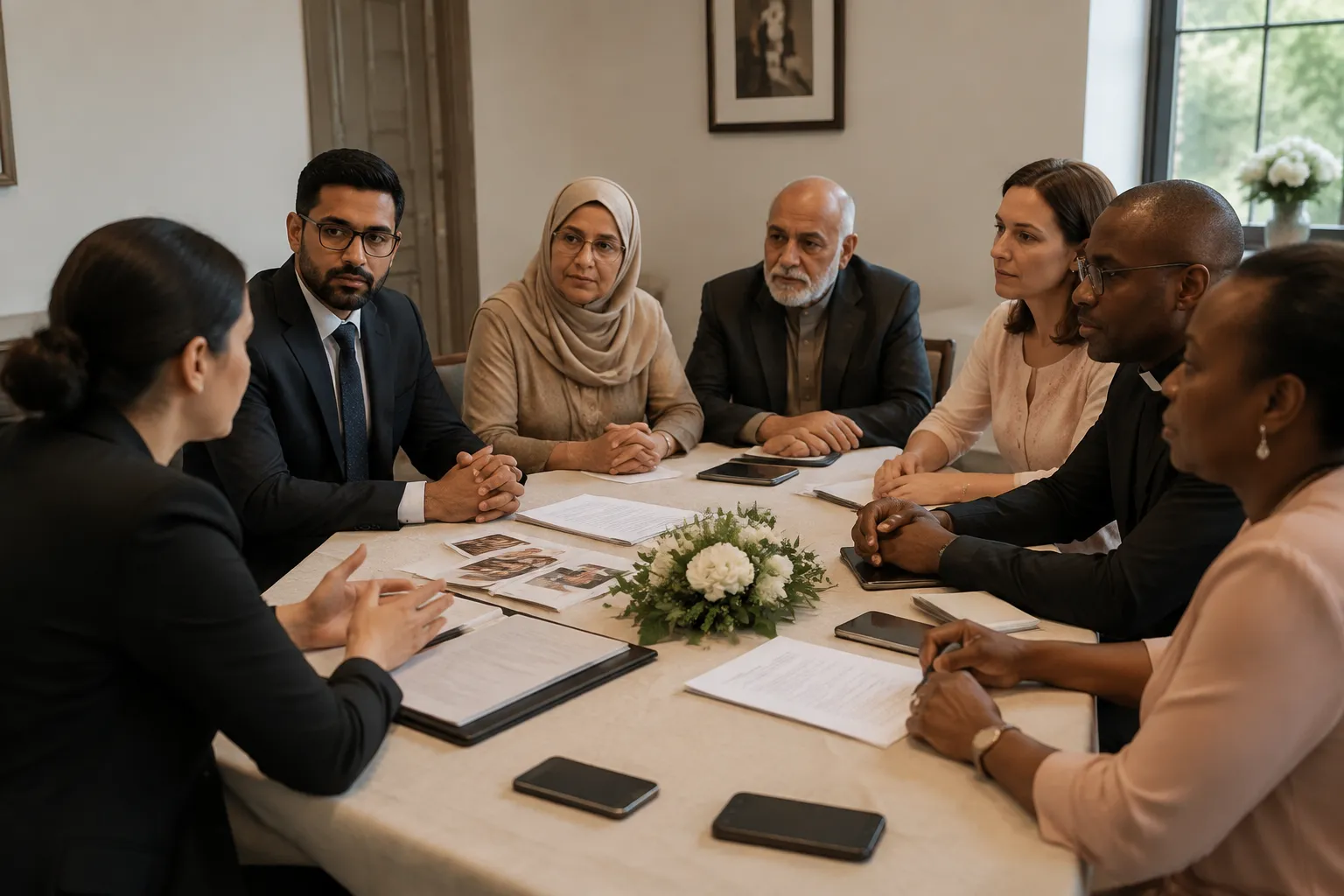
When Nigerian wedding customs meet another cultural, religious, regional, or diaspora context, the first task is often not choosing a ceremony. It is deciding who should be heard, who can decide, and who must confirm the practical details.
A parent may explain family practice. A congregation may set conditions for its service. A registry may control its current process. A vendor may need one authorized contact. These roles can overlap, but they are not interchangeable.
For multicultural wedding families, the useful goal is a clear process rather than equal control over every choice. The couple, both families, relevant institutions, and vendors should know where their responsibility begins and ends.

Why Wedding Decision Ownership Becomes Unclear
Wedding planning includes visible decisions and less visible work. Choosing a venue is easy to see; tracking guest responses, explaining family expectations, checking attire orders, arranging transport, and following up with relatives may happen quietly.
When that work is not assigned, it often falls to the person who is nearby, understands the customs, speaks comfortably with older relatives, or has time to follow up. That person may then appear to control the wedding even when they were only keeping preparations moving. Research on wedding labor also shows why practical work and decision authority can become confused.
Family involvement can carry different meanings. One family may connect financial support with a voice in major choices. Another may offer advice without expecting approval rights. A parent may see a ceremony choice as a family matter, while the couple sees it as a personal decision.
Before discussing a particular custom, separate four questions:
- Who is affected by the decision?
- Who has standing to decide it?
- Who should be consulted because of family knowledge, cultural context, or practical responsibility?
- Who will complete the next action?
A person can be essential to the process without owning the final decision.
Start With a Shared Decision Map
A family conversation becomes more useful when it begins with specific decisions instead of a general request for opinions. “What should we include?” can bring forward competing memories, unstated expectations, and objections that arrive after bookings have been made.
Begin with five working headings:
- Couple choices
- Family consultation
- Registry or civil coordination
- Congregation or religious coordination
- Vendor and logistics decisions
The first version does not need to settle every issue. It needs to show where responsibility is unclear.
| Decision | Couple’s preference | People to consult | Person confirming details | Final authority | Next date |
|---|---|---|---|---|---|
| Ceremony format | What the couple wants included | Relevant family members and congregation | Named couple or family representative | Couple and congregation within their respective roles | Date to confirm |
| Guest list | Working number and priorities | Both families | One guest-list coordinator | Couple, with agreed family input | Review date |
| Aso ebi or coordinated attire | Whether and how it will be used | Family representatives and guests | Named clothing contact or vendor | Couple and agreed family lead | Ordering window |
| Family gifts | What is being considered | Families involved | Person with direct family knowledge | Family agreement within the local context | Confirmation date |
| Photography and music | Style, coverage, and priorities | Couple and key family contacts | Couple or planner | Couple, subject to vendor capacity | Booking date |
The labels will change from one wedding to another. The structure matters more than the exact categories.

Separate Preference, Expectation, and Current Process
Many disagreements begin because three different statements sound alike. A preference describes what someone would like. An expectation describes what someone believes should happen because of family practice or social meaning. A current process is controlled by a registry, congregation, venue, or vendor.
For example, “My family would be happy to see this included” expresses a preference or expectation. “This is how our relatives usually mark this stage” describes family practice. “The congregation needs this information before scheduling” describes an institutional process. “The venue cannot provide that layout” describes a site constraint.
A repeated family practice should not automatically be presented as a civil, religious, or universal cultural requirement. The responsible person or institution should confirm the detail.
- “Is this something the family hopes to see, or something the ceremony requires?”
- “Who can confirm the current process?”
- “Does this apply to this family, this congregation, this registry, or this event?”
- “If we adapt this part, what meaning does the family want us to preserve?”
- “Who needs to agree before we ask the vendor to proceed?”
These questions help prevent a personal preference from being presented as an obligation.
Give the Couple Clear Ownership
The couple usually coordinates the overall shape of the wedding, but it does not need to answer every cultural or procedural question alone. It needs a clear role in decisions about the ceremony, public commitments, guest experience, budget boundaries, and personal participation.
Before a larger family discussion, the couple should agree privately on:
- Which ceremony stages it wants to include or adapt
- Which practices need more explanation before a decision
- What can be delegated
- What should not be decided in a large family meeting
- Which budget boundaries affect family requests
- Who may speak on the couple’s behalf
- How unresolved disagreements will be revisited
This conversation is particularly useful when one partner knows a family practice better than the other. Familiarity can make a custom seem self-explanatory to one person and compulsory to the other.
The couple does not need to reject a practice because it is unfamiliar. It does need enough context to decide whether to accept, adapt, postpone, or decline it.
“We want to understand the meaning and the people involved before deciding how this fits our wedding.”
That wording keeps the discussion open without granting automatic decision rights.
Invite Families Into the Right Decisions
Family consultation is most useful when relatives are invited to explain meaning, identify people who should be involved, and flag details the couple may not know. It becomes harder when every relative is treated as a final approver.
Topics may include an introduction meeting, the order of family contact, gifts, guest grouping, coordinated attire, food, music, greetings, program elements, and the participation of relatives living abroad. The relevant answer may change by family, region, generation, or religious setting.
Ask for the family’s practice rather than assuming a general rule:
- “How has our family handled this before?”
- “Which part matters most to you?”
- “Who should explain this detail to the other family?”
- “What can be adapted without losing its meaning?”
- “Which decision belongs to the couple after hearing everyone’s views?”
- “What would guests need to know before the event?”
Listening does not promise that every suggestion will be followed. The meeting should end with a record of what was agreed, what remains open, and who will confirm each point.
Keep Family Knowledge Separate From Institutional Control
A family may understand its own customs well, but that knowledge does not replace the current process of a registry, congregation, venue, or other institution.
This distinction matters when coordinating a civil or registry ceremony, church or mosque service, traditional ceremony, combined schedule, witness arrangements, documents, appointments, venue rules, or vendor access.
The material supporting this page does not verify Nigerian registry procedures, religious conditions, or fixed Yoruba, Igbo, Hausa, Fulani, or other ceremony sequences. Treat those details as questions to confirm with the relevant local institution or family representative rather than as settled rules.
Ask the responsible institution:
- “Which details are controlled by your current process?”
- “What information or documents should we prepare?”
- “Who may attend or participate at this stage?”
- “Are there timing or scheduling limits?”
- “Can this ceremony be coordinated with another event?”
- “Which points should the family understand before we make promises?”
Record the answer with the date and the role of the person who provided it. A family member or vendor should not interpret an institutional condition unless the institution has confirmed that arrangement.
Clarify Congregation and Religious Questions Early
Religious coordination may involve scheduling, participation, preparation, ceremony format, and communication with families. One family’s experience does not establish another congregation’s practice.
Identify these questions before invitations are issued:
- Who is responsible for contacting the congregation?
- Does each partner need a separate preparation process?
- Who may participate in the service?
- Which elements are determined by the congregation?
- Can cultural readings, music, clothing, greetings, or family roles be included?
- Are there limits affecting the order or combination of ceremonies?
The relevant congregation or faith representative should confirm these points. When two religious or cultural settings are involved, ask each side to explain its own boundaries first. Then compare the effects on timing, venue, participants, clothing, food, photography, and guest communication.
A useful record separates the couple’s desired format, the family’s meaningful practice, the congregation’s current conditions, and the adaptations still available to the couple.
Assign Vendor Handoffs Carefully
Vendors need clear instructions, but they should not be expected to decide cultural meaning or settle family disagreements. Each vendor should have one contact who can gather information and return confirmed instructions.
The vendor may need to know:
- Who can approve changes
- Which family representative can explain names, greetings, or schedule details
- What must remain private or restricted
- Which clothing, food, music, or photography requests are confirmed
- How many ceremony stages are included
- Where the vendor should be at each stage
- Which decisions require the couple’s approval
Useful vendor questions include:
- “What information do you need from the family?”
- “Which details affect your schedule or equipment?”
- “What changes require written confirmation?”
- “Who should approve substitutions?”
- “Which cultural details should be explained by a family member?”
- “When is the final ordering or scheduling window?”
The vendor can coordinate logistics. The couple and families decide what the event means and which practices they want to include.
Make Invisible Planning Work Visible
Decision ownership is only part of the issue. Someone may have no final authority while still performing most of the planning work.
Track recurring tasks such as calling relatives, translating messages, collecting addresses, coordinating guest responses, distributing attire information, checking tailoring or ordering progress, confirming gifts, sending schedules, arranging transport, sharing updates across time zones, and following up with vendors.
Then identify who performs each task and whether that arrangement is intentional. Work can be divided by ceremony stage, family connection, language ability, location, or availability. It should still include a backup person and a clear escalation point.
For example, one partner might coordinate a registry appointment while a parent communicates with older relatives about an introduction meeting. A sibling might collect attire information, while the vendor receives final instructions from one named contact.
Delegation should reduce confusion, not hide responsibility.

Plan for Diaspora and Distance
Distance can change how relatives participate. Someone living abroad may have strong expectations but limited access to local meetings. Someone nearby may perform more practical work simply because they can attend in person.
Physical absence does not show lack of interest, and local involvement does not automatically create decision authority.
Discuss:
- Which meetings require in-person attendance
- Who can join by video or phone
- Which decisions need local confirmation
- How documents, clothing, gifts, or invitations will move between locations
- How much notice relatives need
- Which time zone controls vendor and institution appointments
- Who will communicate a final decision to people who could not attend
A shared written update can help, but it should not replace direct confirmation for sensitive family matters. Mark each item as pending, agreed, or awaiting institutional confirmation.
Use a Conversation Sequence That Allows Adjustment
Trying to settle ceremony format, guest numbers, clothing, gifts, budget, and religious coordination in one meeting can make every disagreement feel personal. A staged conversation gives people room to explain context before they are asked to compromise.
- The couple agrees on its priorities and boundaries.
- Each partner speaks with their own family about expectations and meaningful practices.
- The couple compares what it heard without treating either account as universal.
- Joint family conversations address decisions that depend on one another.
- The relevant registry, congregation, venue, and vendors confirm their own details.
- The couple records decisions, assigns actions, and sets review dates.
- Unresolved points are revisited when new information arrives.
This sequence prevents a family discussion from deciding a matter controlled by an institution. It also makes adaptation easier because the meaning, timing, and practical limits are discussed separately.
When disagreement remains, narrow the issue:
- “What outcome is each person trying to protect?”
- “Is the concern about meaning, timing, cost, visibility, guest comfort, or authority?”
- “Can the practice be adapted without removing its central purpose?”
- “What information would change the decision?”
- “Who needs to confirm the next step?”
Specific questions produce more workable handoffs than general appeals for agreement.
A Practical Checklist for Family Role Clarity
Before confirming a major wedding decision, check that:
- The decision is written in specific language.
- The couple’s preference is recorded separately from family expectations.
- The people affected by the decision have been identified.
- The final decision-maker is named.
- Any registry or congregation question has been sent to the relevant institution.
- The vendor has one approved contact.
- The person completing the next action is named.
- The deadline or ordering window is recorded.
- Adaptations have been explained to the people who attach meaning to the practice.
- Unresolved points are marked as pending rather than agreed.
- The couple knows which decisions remain theirs.
This structure can support ceremony choices, family introductions, gifts, coordinated attire, guest communication, photography, food, music, and reception flow. It does not determine what a particular Nigerian family, congregation, registry, or vendor requires.
Common Confusions to Resolve Early
“If a parent pays, the parent decides everything.”
Financial contribution may influence expectations, but the arrangement should be discussed directly. Ask which decisions the contribution is connected to and which remain with the couple.
“If a custom is common, it is compulsory.”
A practice may be meaningful in one family and unfamiliar in another. Ask who observes it, what purpose it serves, and whether adaptation is acceptable.
“The vendor can tell us what the tradition requires.”
A vendor can explain its capacity and process. Cultural meaning should come from the people involved, while institutional conditions should come from the institution.
“One family representative can speak for everyone.”
A representative can coordinate communication, but the role should be agreed. They may report a family decision, gather views, or assist with logistics.
“The person doing the work should make the decision.”
Planning labor and decision authority are related but separate. The person carrying out a task needs enough information and access to complete it, while the final decision may remain elsewhere.
The Working Standard
A workable family planning process leaves fewer hidden assumptions. The couple knows which choices belong to it. Each family knows where its knowledge and expectations are welcome. The registry or congregation is asked about matters under its control, and vendors receive one clear handoff.
Disagreement may remain. Decision ownership does not remove every difference; it identifies the issue, the next confirmation, the responsible person, and the timing consequence.
For multicultural wedding families, begin each unresolved item with a precise question: who needs to be heard, who needs to decide, and who will confirm what happens next?
Sources
These sources support planning mechanisms and comparative examples. They do not establish Nigerian civil, religious, registry, or family requirements.
- Is It Our Day or the Bride’s Day? The Division of Wedding Labor and Its Meaning for Couples
- The Accommodation of Communication in the Family as an Adjustment of Cultural Values between Generations
- Personalizing the Wedding: A Cross-Cultural Study of Wedding Motivations in the Keralite Indian and Southern American Communities
- To love an(other): narratives of mixed marriages amongst British Pakistani Muslims
- Orchestrating rituals through retailers: An examination of gift registry
- Event Plan: Finnish-Singaporean Cross-cultural Wedding
- A wedding in the family: home making in a global kin network